Introduction
The original Self-Service website was failing to meet the needs of both users and the organisation. It suffered from a confusing information architecture, fragmented content, and painfully slow page load times.
To address these challenges, we carried out a comprehensive UX audit combining qualitative and quantitative research. By analysing and documenting real user behaviours, we built a clear picture of their needs and pain points. This research became the foundation for a truly user-centred design approach.
Summary of findings
- The African market is incredibly data cost conscious
- 75% of all visitors are returning visitors
- 'Pay' and 'Clear error code' are the most popular functions
- A mobile first approach is paramount
My role
Information architecture • Wireframes • UI design • Manage tasks among team members: research gathering (customer habits/trends) & quantitative insights
Wireframing

Design


Quantitative


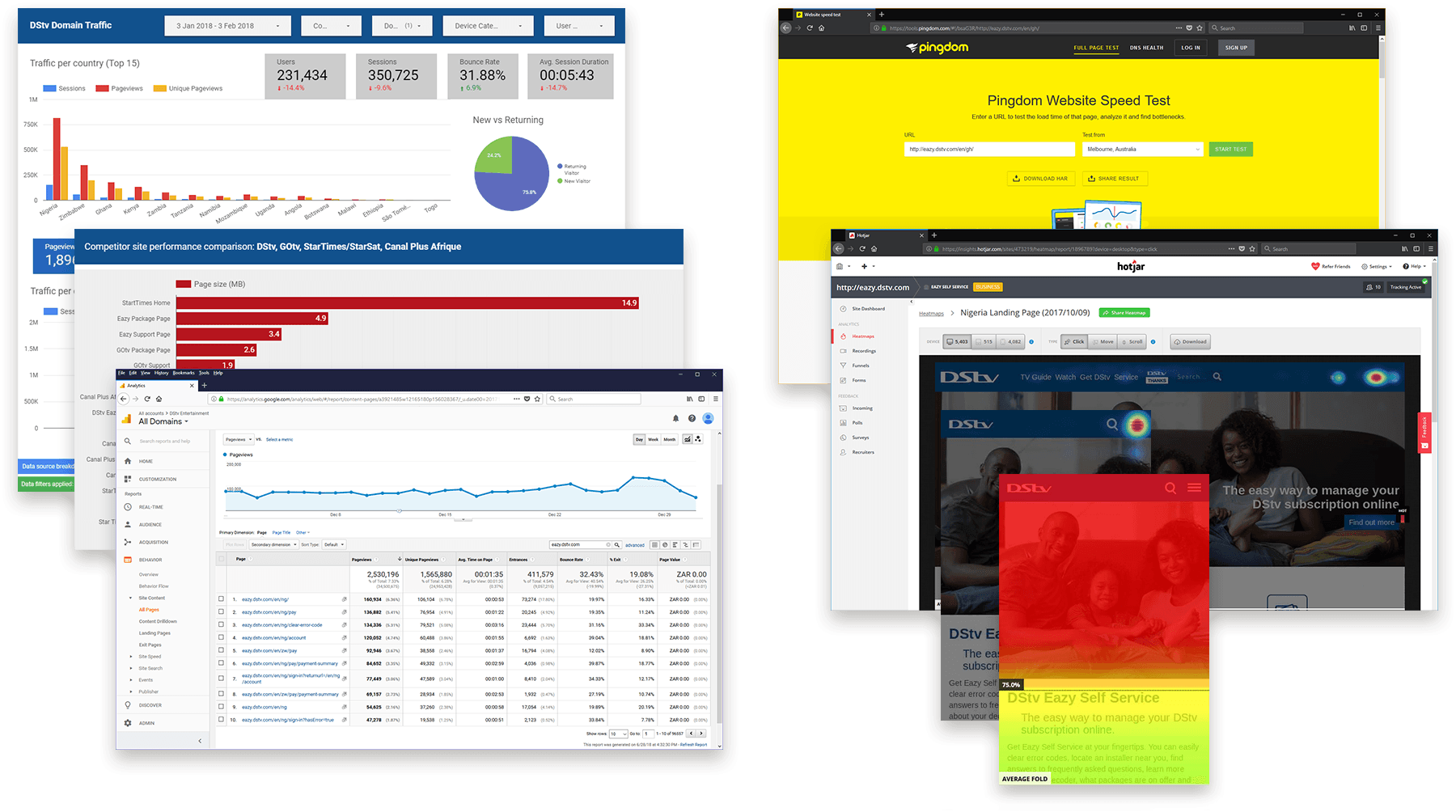
Qunatitative research revealed that the original Self Service website was painfully slow. This was a major pain point for users, especially those in data cost conscious regions.
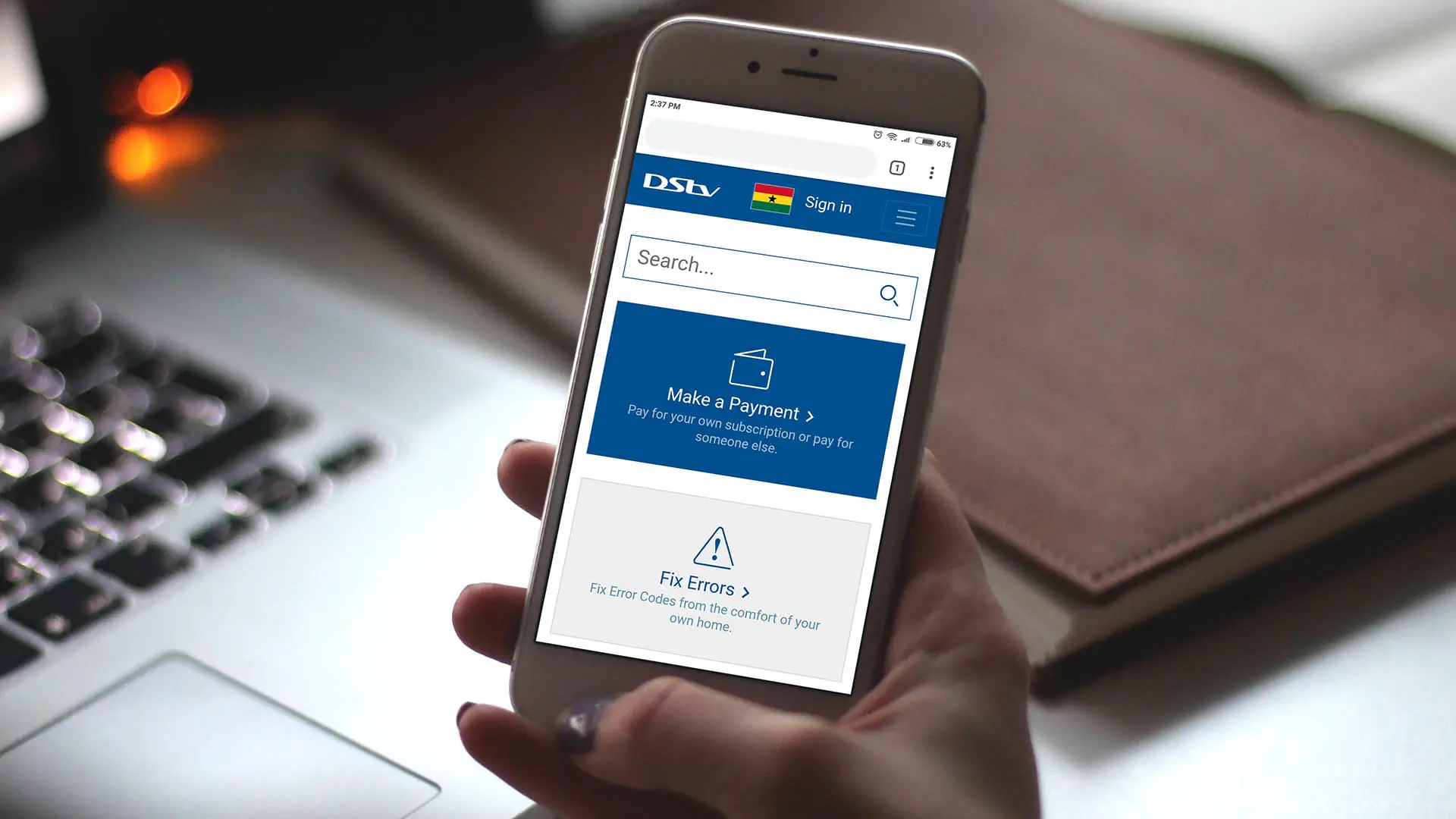
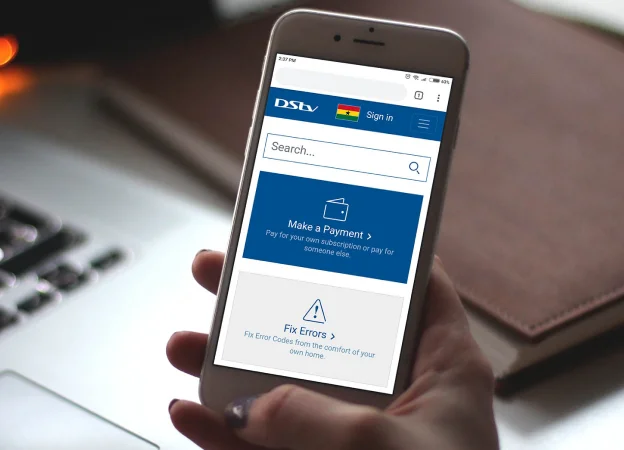
Though not the most visually striking interface, this early prototype fulfilled all key requirements for most users in Africa—ultra-fast loading time and immediate access to desired features.