inQuba

Customer journey mapping software

About the role

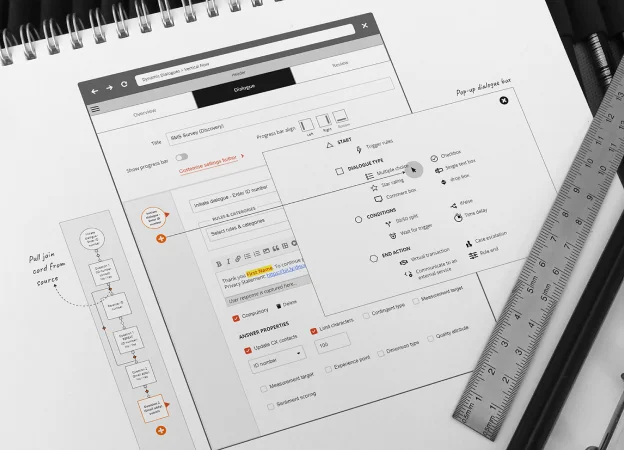
inQuba (employed: 2020 - 2023) is a fast paced software company (B2B SaaS) where one must get stuck in and start ideating immediately with wireframes so as to solve business requirements. Being a small organisation and seeing I'm the only/principal product designer, its rewarding when my UI designs come to life within a software production environment. My work below highlight the design process I use.

Design
Figma
Adobe XD
Miro
Development
HTML5
CSS3
JavaScript
Bootstrap
Documentation
Google Docs

Design process

Binoculars

1. Discover

  • User research
  • Stakeholder interviews
  • Competitive analysis
Target

2. Define

  • Personas
  • Affinity graphs
  • User journey mapping
Lightbulb

3. Ideate

  • User flow
  • Card sorting
  • Information architecture
Design

4. Design

  • Wireframes
  • Hi-fi designs
  • Interactive prototypes
Test

5. Test

  • Feedback
  • Conclusions
  • Future concepts

User persona

Theoretically the role of personas is to help understand the customer's needs, experiences, behaviours, pain points and goals. Personas also make the design task less complex, help guide the ideation process and look to achieve a good user experience for that specific target user group.

The question-and-answer scenario below is based on general feedback I compiled together in 2021.

User persona - CX Analyst

CX Analyst

Goal

What does the CX Analyst hope to achieve with inQuba Journey?

  • Define, analyse and understand a customer's end-to-end journey experience
  • Build and automate journey interventions across all channels of engagement
  • Easily compare and segment journey paths based on date, demographic, custom cohort, tags, keywords and taxonomies
  • Seek to optimise bottle-necks and obstacles along broad and granular journey paths
  • Ability to build out one's own journey path
  • Receive instant customer/survey data that can rapidly integrate into testing new journey possibilities

Keywords

Deep data mining
Integrated cohort creation
Advanced customer insights
Customisation

Pain points

Stumbling blocks that hinder the persona from achieving their goal.

  • Lack of real, insightful results. The software must have the capability to go beyond the surface to extract deep and meaningful insights
  • Tools within the product to help make sense of big data so as to avoid drowning in a sea of data
  • Automate repetitive tasks easily. Also the capability to program tasks in Python or R
  • Prompts and indicators need to be relevant and applicable to the task at hand
  • Data visualisations need to be interchangeable, (pie chart can easily convert to a doughnut chart)
Scenario

Define when, where and how the story of the persona takes place.

The CX team is always looking for new ways to extract insights and with 'inQuba Journey' we're seeing great potential with its 360° view of the customer's journey experience.

The interchangeable micro and macro viewing capability is the starting point for almost every strategy session. Also, the ability to easily 'slice 'n dice' (segment) the customer base in innumerable ways provides the flexibility we need to find that golden thread where a certain audience, often buried deep in the system needs attention.

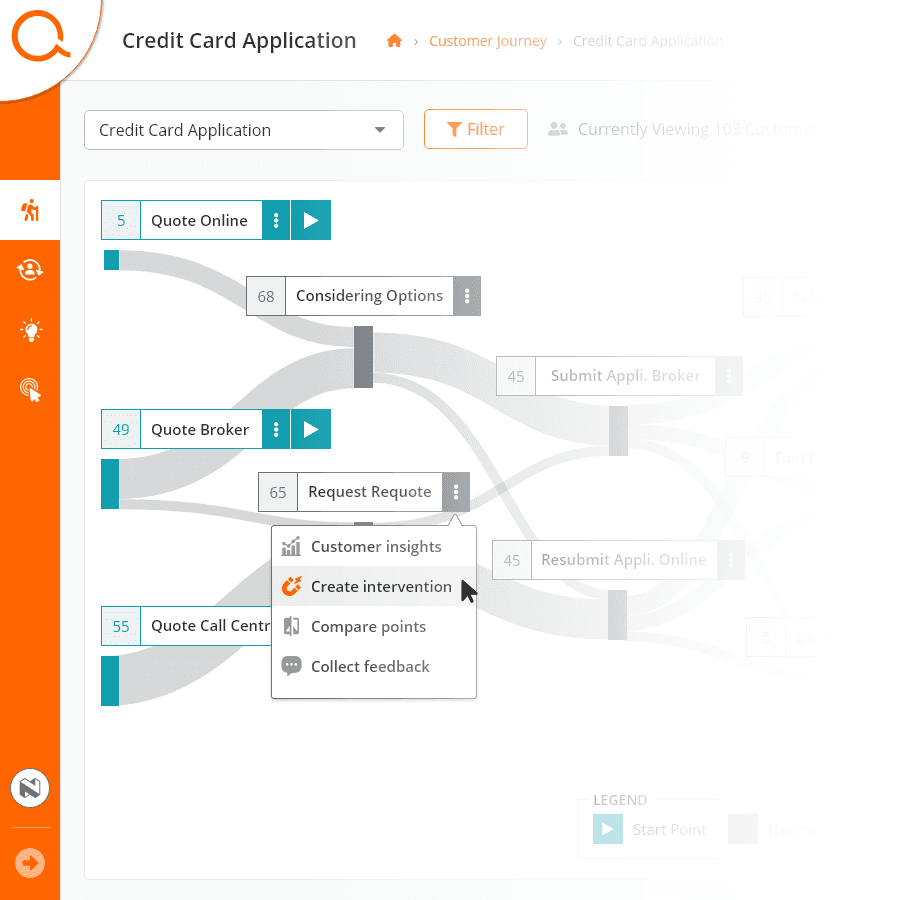
There's alot of competition in the CX market and what makes 'inQuba Journey' the differentiator is its sentiment overlay capability. Whether its VoC, survey responses, reporting insights or an obvious bottleneck, the fact that all these elements can be viewed in one central place without being overwhelming really makes our lives easier. Oh, and did I mention you can also intervene on that same screen too?

Data visualisations need refining but we're promised interchangeable views in an upcoming release.

Needs

Product features for CX Analysts

Customer journey
82%
CX reporting
74%
Engage
80%
Voice of the customer
92%
Case management
40%

Information architecture

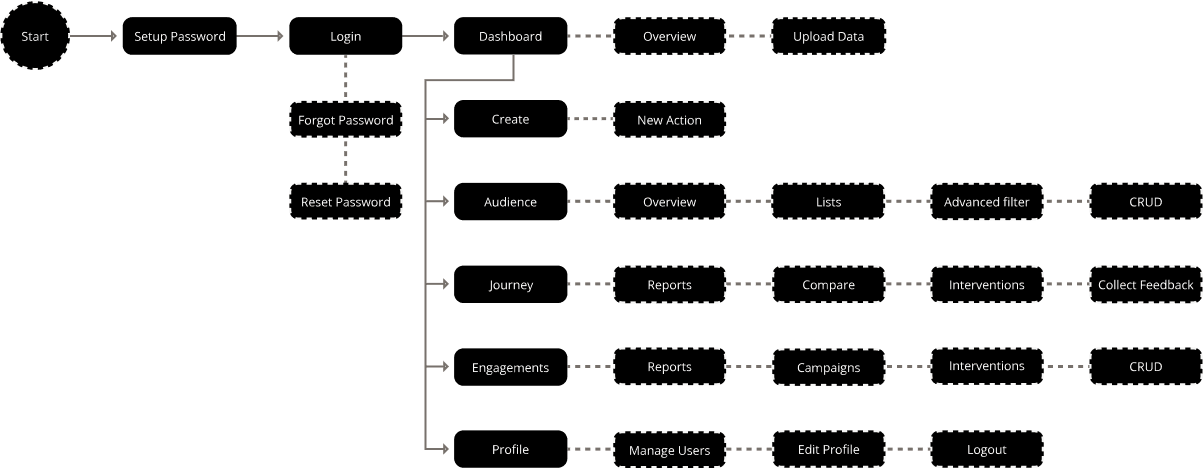
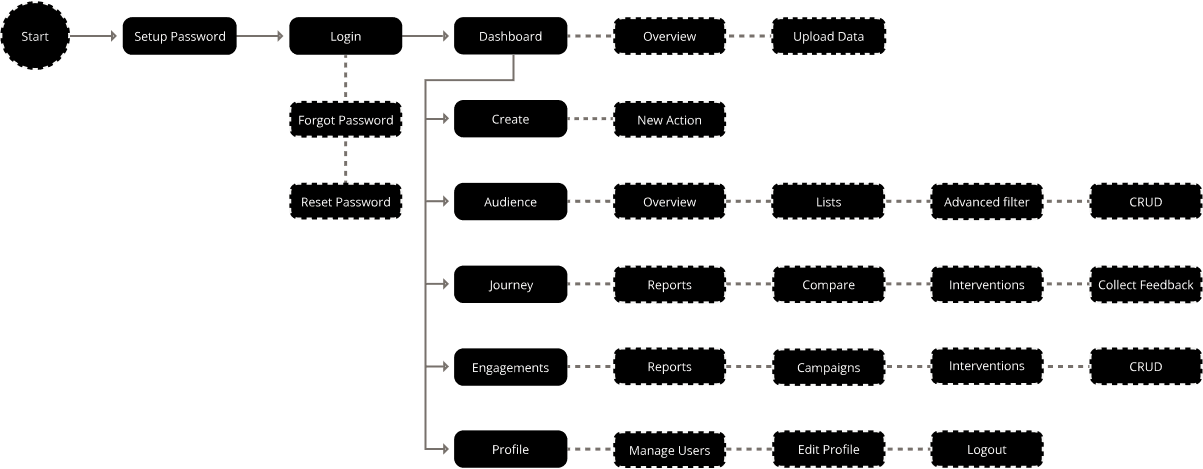
My job entails creating an experience that allows the user to focus on their tasks, not on finding their way around the platform. With this in mind I started a user flow at its highest, most simplest level (see below).

Within a collaborative environment, the product team (myself and two other colleagues) explored numerous user flow scenarios that are always evolving as business requirements keep changing.

inQuba sitemap

UI guidelines

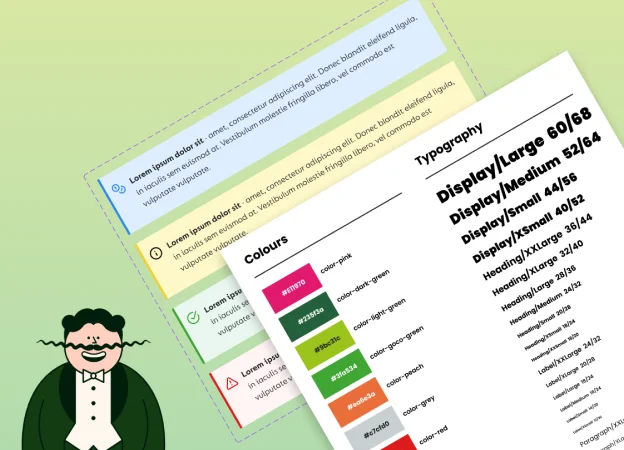
My goal is to keep things simple and consistent so that it's actually implemented. In my experience, less is definitely more when it comes to guidelines. If you want your product team to actually use and understand the guidelines, it's important to keep them concise so that they're easy to consume and remember.

Typography and colours

Typography

Components

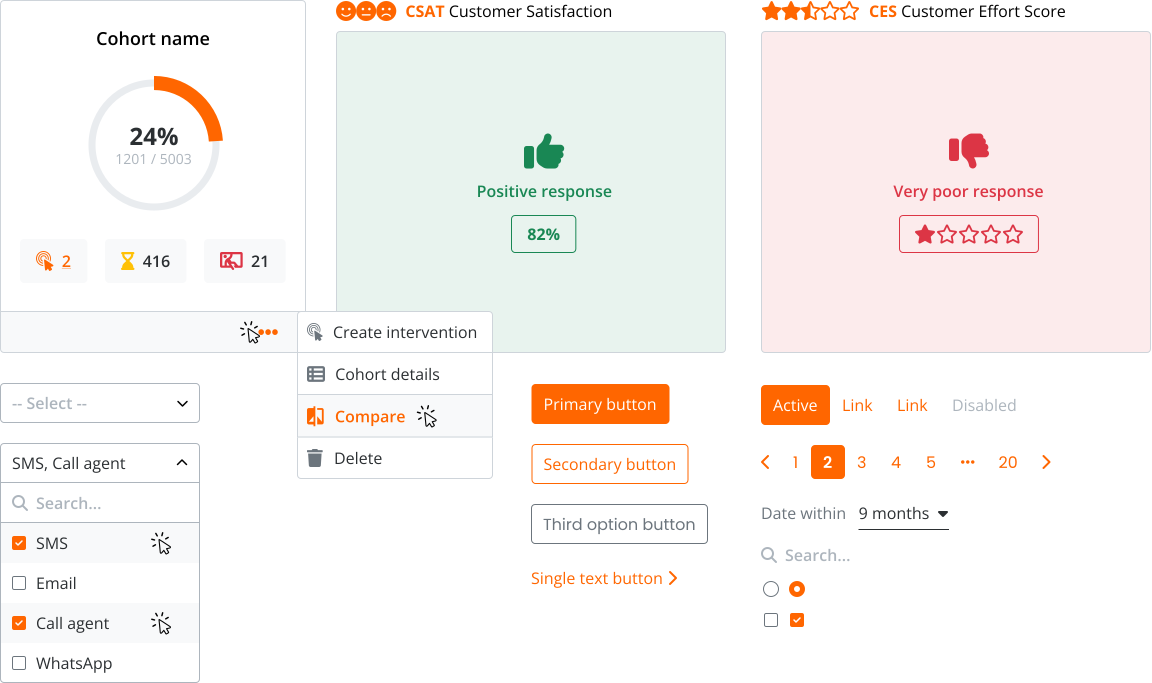
Components

High fidelity designs

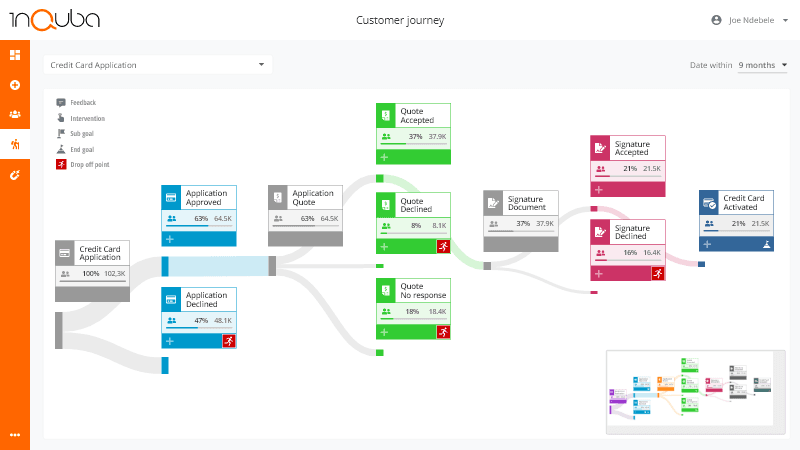
inQuba journey
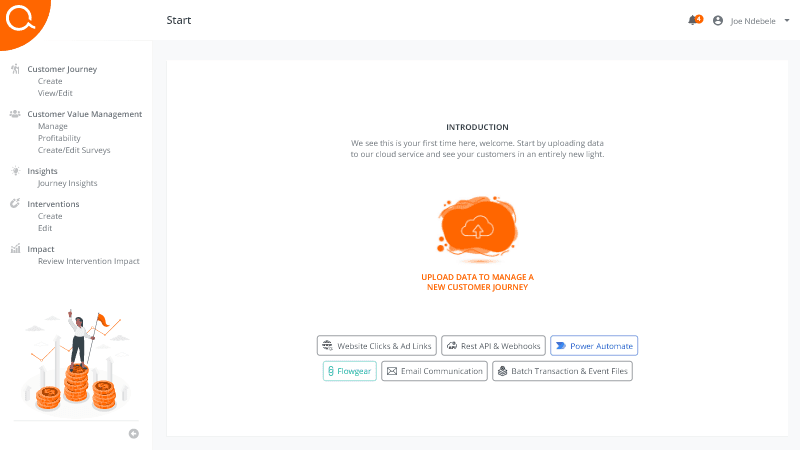
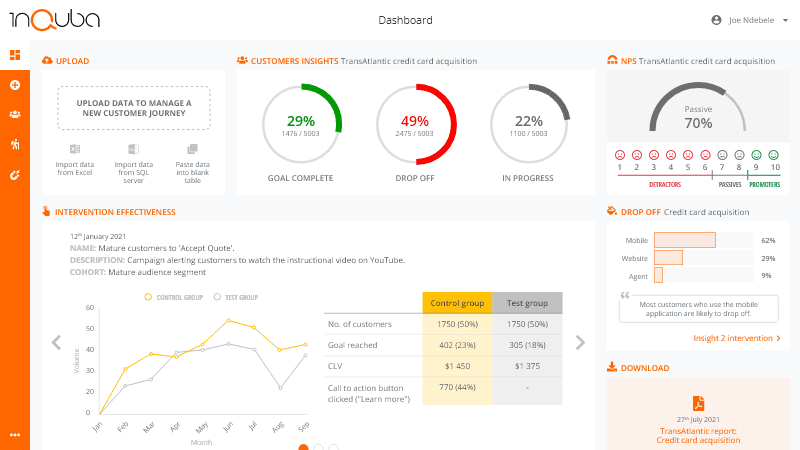
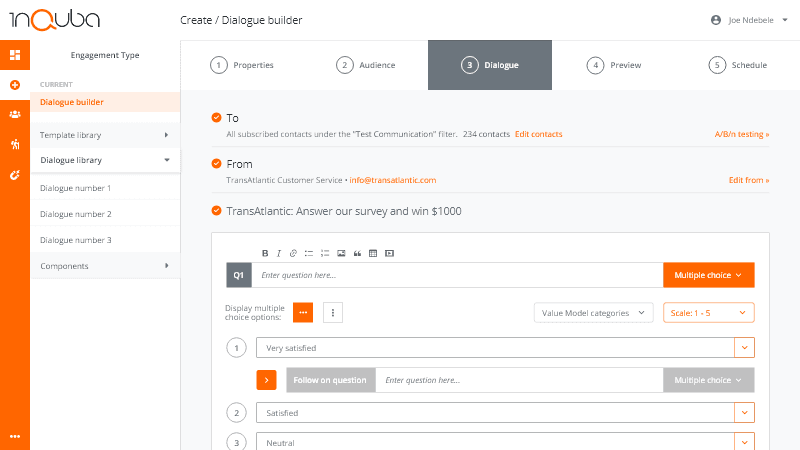
inQuba startinQuba dashboardinQuba - Dialogue builderinQuba - old journey model
Dropdown-menu

Standout moment

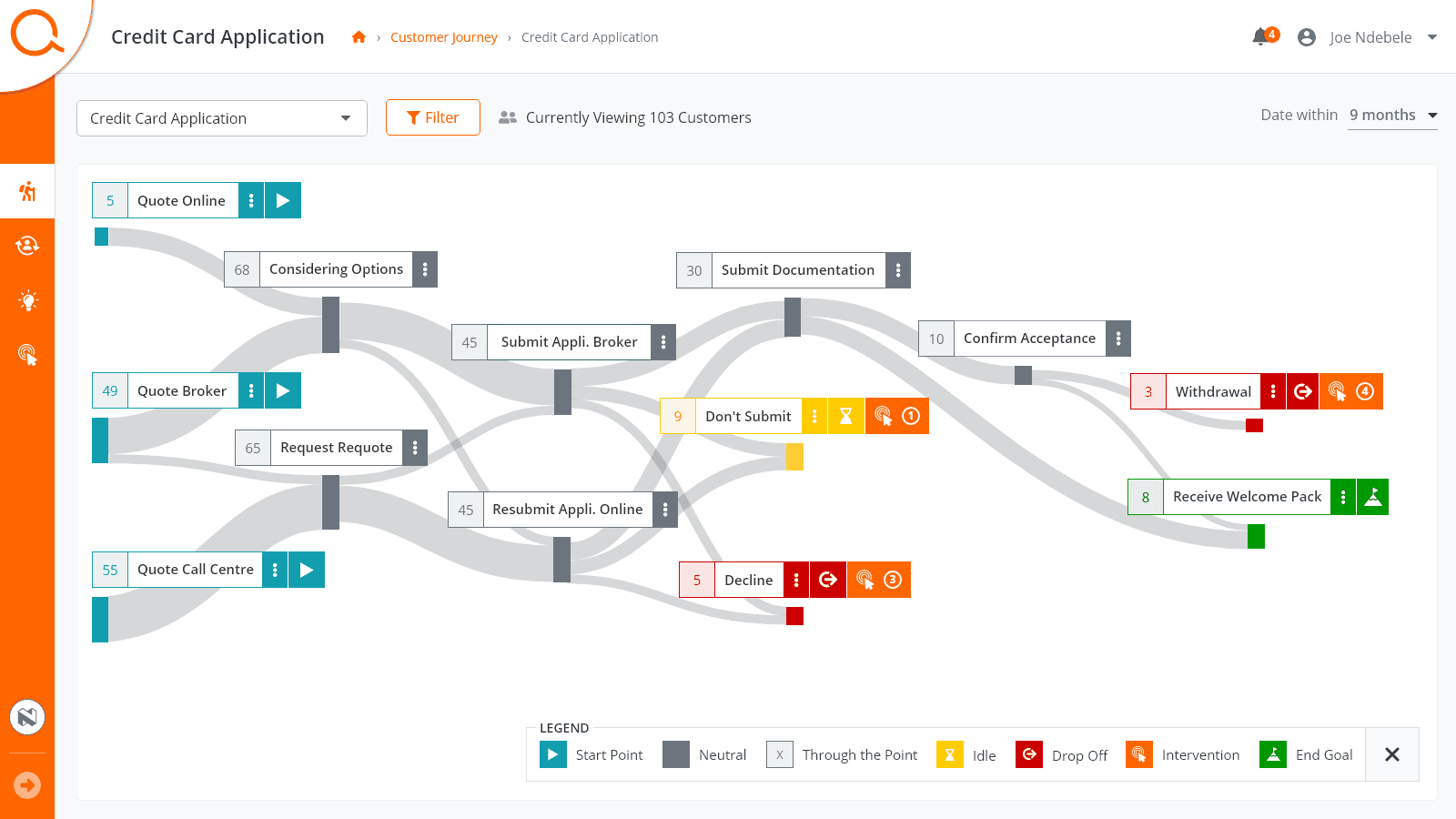
By dramatically enhancing each touch point's capability on the customer journey map (Sankey Diagram) into an autonomous tool that drives all the capability in the software is probably my most worthwhile contribution. This main feature really resonates with our users and probably makes it stand apart from the competition.


text more like this